Does PCT Have Side Effects? How Long It Takes to Work & Post-Cycle Therapy Guide
When you finish an anabolic steroid cycle, your body enters a critical transitional state. During your cycle, introducing synthetic hormones causes your endocrine system to downregulate its own production. The Hypothalamic-Pituitary-Testicular Axis (HPTA)—the control center for your natural testosterone—goes dormant.
Post-Cycle Therapy (PCT) acts as a chemical jump-start to revive this system, helping you retain your muscle gains, restore normal metabolic function, and keep your mental health stable. However, introducing medications to fix a hormonal imbalance brings its own set of challenges.
Two primary questions dominate fitness communities across the United States and Canada: Does PCT have side effects? and How long does PCT take to work? This guide answers both with clinical evidence, real-world protocols, and practical expectations.
Table of Contents
- The Biological Reality Behind Post-Cycle Therapy
- How Long Does PCT Take to Work?
- Does PCT Have Side Effects? What to Expect
- The Most Popular PCT Compounds Broken Down
- Standard PCT Protocols & Timing Strategies
- Why Skipping PCT Can Be Dangerous
- Frequently Asked Questions (FAQs)
- Reputable Evidence & Resources
The Biological Reality Behind Post-Cycle Therapy
During a cycle, your brain reads the high level of hormones in your bloodstream and assumes you have plenty to spare. As a result, the hypothalamus stops releasing Gonadotropin-Releasing Hormone (GnRH). Without GnRH, the pituitary gland ceases production of Luteinizing Hormone (LH) and Follicle-Stimulating Hormone (FSH). LH signals your Leydig cells in the testes to produce testosterone, while FSH controls spermatogenesis (sperm production).
When your cycle ends and the synthetic compounds clear out, you are left with near-zero levels of both exogenous and endogenous testosterone. This state is known as hormonal crash or hypogonadism.
The goal of PCT is to force the pituitary gland to produce LH and FSH again, signaling your body to manufacture its own testosterone before muscle catabolism (muscle breakdown) and severe mood drops set in.
How Long Does PCT Take to Work?
The recovery process is a multi-stage timeline rather than an overnight fix. A standard, well-structured PCT protocol typically runs between 4 to 6 weeks. However, the time it takes for your body to fully recover back to baseline depends on several variables.
The True Timeline: What to Expect
[Cycle Ends] ──> [Clearance Window (1-3 weeks)] ──> [Active PCT Program (4-6 weeks)] ──> [Baseline Stabilization]
- The Clearance Window (Pre-PCT): You cannot start PCT while synthetic hormones are still active in your body. If you are using long-ester compounds like Testosterone Enanthate or Cypionate, you must wait 10 to 14 days after your last injection. For ultra-long esters like Deca-Durabolin (Nandrolone Decanoate), you may need to wait up to 21 days. If you start PCT too early, the residual synthetic hormones will continue suppressing your system, rendering your PCT medications ineffective.
- The First 2 Weeks of PCT: Within 10 to 14 days of beginning a proper Selective Estrogen Receptor Modulator (SERM) protocol, your pituitary gland should show a measurable spike in LH and FSH production. Physically, you may notice a return of morning erections, localized energy improvements, and stabilized moods.
- Weeks 4 to 6 (The End of Protocol): By the end of a 6-week cycle, your internal signaling machinery should be functioning independently.
- Post-PCT Baseline Stabilization: Just because your medication protocol is finished does not mean your body is 100% recovered. It can take another 1 to 3 months after your last PCT dose for your body to lock in homeostatic production without chemical support.
Factors That Delay Your Recovery
- Cycle Duration: A 16-week cycle takes significantly longer to recover from than an 8-week cycle.
- Compound Choices: 19-nor derivatives like Trenbolone and Deca-Durabolin are notoriously suppressive. Their metabolites can linger in your system for months, dragging out the recovery timeline.
- Age: Older athletes naturally have less endocrine resilience than younger individuals, which slows down HPTA reactivation.
Does PCT Have Side Effects? What to Expect
Yes, Post-Cycle Therapy can carry noticeable side effects. The medications used in PCT—primarily SERMs and aromatase inhibitors—are powerful clinical pharmaceuticals originally developed for oncology and fertility treatments. When you use them to manipulate your hormone levels, your body will react.
Common Physical and Psychological Side Effects
- Emotional Volatility and Mood Swings: This is most frequently reported with Clomiphene (Clomid). Users often experience heightened anxiety, irritability, and sudden bouts of depression or emotional sensitivity. This happens because SERMs block estrogen receptors in specific areas of the brain, disrupting the neurotransmitters that regulate your mood.
- Visual Disturbances: A rare but notable side effect linked to Clomid use is the appearance of eye floaters, blurry vision, or flashes of light. This occurs because the medication can bind to estrogen receptors in the retina or pituitary gland, causing localized inflammation. If vision side effects present themselves, the compound must be discontinued immediately, as some changes can become permanent if ignored.
- Gastrointestinal Distress: Nausea, mild abdominal cramping, and bloating can occur as your digestive system adjusts to processing oral SERM tablets daily.
- Hot Flashes and Night Sweats: By blocking estrogen signaling, your body can mimic symptoms similar to menopause. Sudden spikes in body temperature and heavy sweating during sleep are common during the first two weeks of treatment.
- Libido Changes: While PCT aims to restore your sex drive, the initial shift from high androgen cycles down to baseline can cause temporary erectile dysfunction, low libido, or fluctuating sexual performance.
The Most Popular PCT Compounds Broken Down
Understanding what each medication does can help you anticipate how it affects your body.
1. Tamoxifen Citrate (Nolvadex)
Nolvadex is often the baseline anchor for most PCT setups. It is highly effective at stimulating LH production while simultaneously blocking estrogen receptors directly in breast tissue, preventing gynecomastia (enlargement of breast tissue in males).
- Pros: Mild side-effect profile compared to Clomid; exceptional at preventing flare-ups of breast tissue sensitivity.
- Cons: Can slightly reduce IGF-1 (Insulin-like Growth Factor 1) levels, which can mildly impact muscle retention.
2. Clomiphene Citrate (Clomid)
Clomid is a stronger stimulator of LH and FSH production than Nolvadex, making it excellent for severe suppression cases.
- Pros: Powerful, fast-acting HPTA stimulation.
- Cons: Carries a much higher risk of mood alterations, emotional sensitivity, and visual issues.
3. Human Chorionic Gonadotropin (HCG)
HCG mimics LH directly. It is typically utilized before or during the very beginning of a PCT window to wake up atrophied (shrunken) Leydig cells in the testes, preparing them to respond to the natural LH your brain will soon produce.
- Pros: Directly reverses testicular atrophy and restarts local testosterone production rapidly.
- Cons: Must be injected rather than taken orally. If overused or taken for too long, it can desensitize your Leydig cells, leading to permanent natural suppression.
Standard PCT Protocols & Timing Strategies
Disclaimer: The following timelines represent historical observations within contemporary sports medicine literature and are not personal medical prescriptions. Consult a qualified endocrinologist before starting any pharmaceutical protocol.
To minimize side effects and optimize the speed of recovery, modern protocols emphasize moderate dosages over an extended timeframe rather than mega-dosing early on.
| Week | Nolvadex (Tamoxifen) Daily Dose | Clomid (Clomiphene) Daily Dose | Primary Goal |
| Week 1 | 40 mg | 50 mg | Initiate aggressive pituitary signaling |
| Week 2 | 40 mg | 50 mg | Maintain initial LH/FSH upsurge |
| Week 3 | 20 mg | 25 mg | Step down dosage as natural production begins |
| Week 4 | 20 mg | 25 mg | Support steady baseline production |
| Week 5 (Optional) | 10 mg | — | Gentle taper for heavy cycles |
| Week 6 (Optional) | 10 mg | — | Final stabilization |
Critical Rules for Administration
- Consistency: SERMs have distinct half-lives (Nolvadex is roughly 5 to 7 days, Clomid is roughly 5 days). Take your dose at the same time every day to maintain stable blood levels and avoid sudden mood swings.
- Do Not Exceed Standard Dosing: Taking 100 mg or more of Clomid does not make your testosterone recover twice as fast; it simply amplifies your risk of vision damage and severe depression.
Why Skipping PCT Can Be Dangerous
Some individuals choose to skip PCT entirely, hoping their bodies will naturally balance out over time. While the human body can eventually recover on its own, doing so introduces severe physical and psychological risks:
The Muscle Washout: Without immediate hormonal intervention, your body can remain in a hypogonadal state for 4 to 12 months. During this time, high levels of cortisol will go unchecked by testosterone, destroying the muscle mass you built during your cycle.
Psychological Risks: Extended periods of near-zero testosterone often lead to severe depressive states, chronic fatigue, and cognitive fog. The sudden loss of drive can affect your personal life, career, and physical training routine.
Cardiovascular Strain: Prolonged hormonal imbalances can negatively affect your lipid profiles, elevating Low-Density Lipoprotein (LDL/bad cholesterol) while crushing High-Density Lipoprotein (HDL/good cholesterol), which places unnecessary strain on your heart.
Frequently Asked Questions (FAQs)
1. Can I use over-the-counter booster supplements for my PCT?
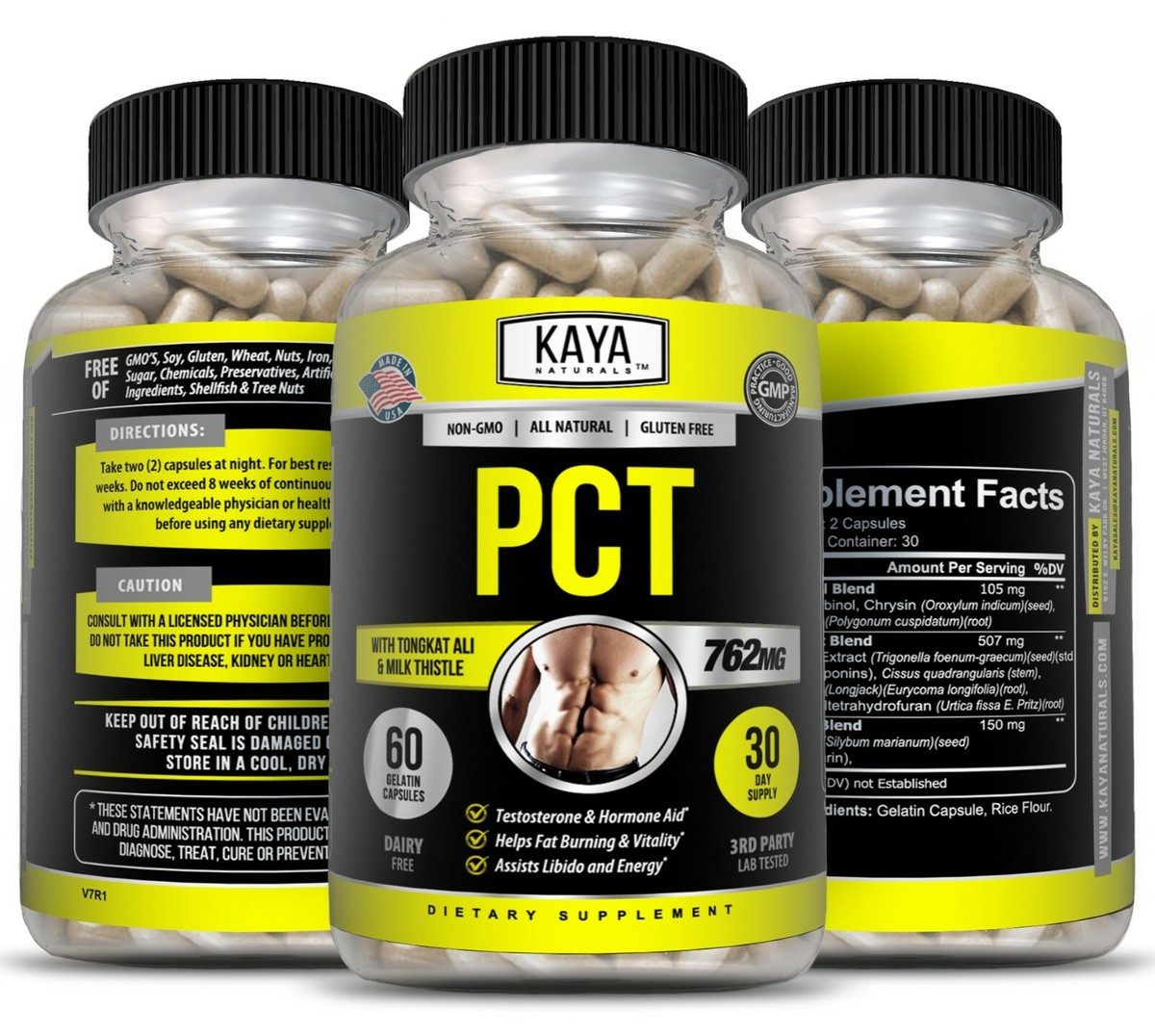
No. Over-the-counter testosterone boosters, herbal blends, and vitamins cannot stimulate the pituitary gland to release LH and FSH after medical-grade shutdown. While items like Zinc, Magnesium, and Ashwagandha are excellent for general wellness, they lack the chemical strength needed to reverse pharmaceutical-induced hypogonadism.
2. How do I know if my PCT worked?
The only definitive way to confirm a successful PCT is through comprehensive bloodwork. You should arrange a hormone panel exactly 3 to 4 weeks after your last PCT dose. This ensures the PCT medications have fully cleared your system, giving you an accurate reading of your natural, unassisted hormone production.
3. What should I do if I get eye floaters while taking Clomid?
If you experience blind spots, floaters, or sudden blurriness while taking Clomid, discontinue the drug immediately. Switch your protocol to Nolvadex to continue your recovery, and consult an eye care professional if the symptoms do not clear up within a few days.
4. Should I lose weight or cut calories during PCT?
No. Cutting calories during PCT is a common mistake that can lead to losing your gains. Your body is in a hormonally compromised, highly catabolic state. To retain your muscle mass, you should consume at least maintenance calories and keep your protein intake high.
5. Does HCG replace Nolvadex or Clomid?
No, HCG does not replace SERMs. HCG mimics LH and stimulates the testes, but it actually suppresses the brain’s hypothalamus and pituitary gland. Because of this, you should always follow an HCG protocol with a standard SERM protocol (like Nolvadex or Clomid) to ensure your brain is signaled to recover as well.
6. What are the common options for blood work in the USA and Canada?
In the United States, athletes routinely utilize private monitoring platforms to order direct consumer lab testing through nationwide providers like Labcorp or Quest Diagnostics. In Canada, testing options vary by province, with private alternatives like Dynacare or Lifelabs supplementing standard provincial health systems.
Reputable Evidence & Resources
For further reading on the endocrine system, clinical applications of SERMs, and hormone monitoring options across North America, review these resources:
- U.S. Food and Drug Administration (FDA): FDA Approved Drug Products Database — Research official prescribing guidelines, warnings, and safety information for Tamoxifen and Clomiphene.
- The Journal of Clinical Endocrinology & Metabolism: Oxford Academic JCEM — Access peer-reviewed clinical studies tracking the long-term recovery patterns of medication-induced hypogonadism.
- National Institutes of Health (NIH): PubMed Central — A comprehensive repository for searching biochemical mechanisms regarding how SERMs interact with human estrogen receptors.
Need to plan out your recovery protocol or verify your supplies before starting your next phase? Browse our selection of verified compounds and monitoring resources.