
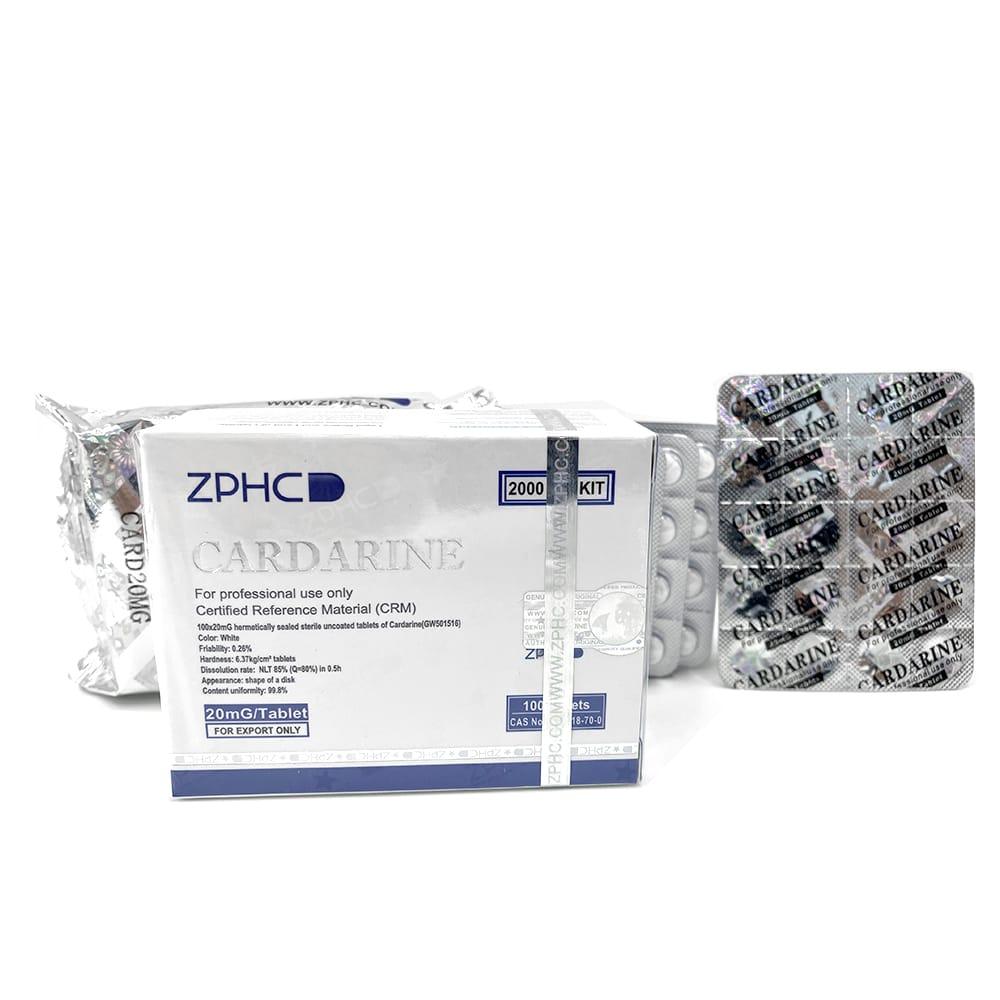
Cardarine (GW-501516) ZPHC — 20 mg (100 tablets × 20 mg)
Original price was: $72.00.$55.00Current price is: $55.00.
Product Overview
Cardarine, known scientifically as GW-501516, is a peroxisome proliferator-activated receptor delta (PPARδ) agonist that has garnered significant interest in metabolic and endurance research. Originally developed through a collaboration between Ligand Pharmaceuticals and GlaxoSmithKline, this compound acts as a selective metabolic modulator that influences gene expression related to fatty acid oxidation and energy homeostasis .
Description
Cardarine (GW-501516) by ZPHC – 20 mg Tablets for Research
Product Overview
Cardarine, known scientifically as GW-501516, is a peroxisome proliferator-activated receptor delta (PPARδ) agonist that has garnered significant interest in metabolic and endurance research. Originally developed through a collaboration between Ligand Pharmaceuticals and GlaxoSmithKline, this compound acts as a selective metabolic modulator that influences gene expression related to fatty acid oxidation and energy homeostasis .
The primary mechanism of action involves the activation of the PPARδ pathway, which regulates the expression of genes involved in fatty acid oxidation and energy metabolism. This activation leads to increased mitochondrial function and enhanced oxidative capacity in muscle tissue . Research has shown that PPARδ activation promotes the development of slow-twitch (Type I) muscle fibers and increases the body’s ability to utilize fat as an energy source .
ZPHC presents this Cardarine formulation as a research-grade compound with verified purity exceeding 99%. Each scored, film-coated tablet contains 20 mg of active ingredient, allowing for precise dosing adjustments in research protocols. The product is supplied in secure, sealed blisters within tamper-evident packaging, featuring a scratch-code for authenticity verification.
Key Research Applications
Metabolic Research: Cardarine has been studied for its effects on lipid metabolism, demonstrating potential in modulating fatty acid oxidation and glucose uptake in skeletal muscle tissue . Research indicates that PPARδ activation can reverse metabolic abnormalities by stimulating fatty acid oxidation and increasing energy expenditure .
Endurance Studies: Preclinical investigations have demonstrated that PPARδ agonists like Cardarine can significantly improve physical endurance through enhanced fatty acid oxidation and increased mitochondrial biogenesis . This mechanism has made it a subject of interest in exercise physiology and performance research.
Cardiovascular Research: Early studies investigated Cardarine’s potential effects on lipid profiles, including its ability to increase HDL cholesterol and modulate triglyceride levels . These properties have been explored in the context of metabolic and cardiovascular disease research.
Quality and Purity
ZPHC ensures pharmaceutical-grade quality through:
-
Batch testing confirming >99% purity
-
Heavy metal and microbiological clearance
-
Stable, film-coated tablet formulation
-
Scored tablets for precise dose adjustment
-
Tamper-evident packaging with authenticity verification
Research Protocol Guidelines
For research applications, typical protocols involve:
-
Dosage: 10-20 mg per day administered orally
-
Cycle Duration: 6-8 weeks
-
Administration: Tablets may be taken once daily or split for twice-daily administration
-
Combination Studies: Sometimes researched alongside other metabolic modulators
Note: These guidelines are for research purposes only and should not be construed as recommendations for human consumption.
Safety Information
It is important to note that while initial human studies using doses up to 10 mg daily for periods up to 12 weeks did not report significant adverse effects, Cardarine’s development was discontinued due to preclinical safety concerns . The World Anti-Doping Agency (WADA) has classified Cardarine as a prohibited substance under the category S4.4.1 Metabolic Modulators . This compound is not approved for therapeutic use in humans and is intended exclusively for research purposes .
Product Features
-
Pharma-grade GW-501516 with verified purity
-
100 tablets × 20 mg for extended research applications
-
Scored, film-coated tablets for accurate dosing
-
Tamper-evident packaging with authenticity verification
-
Worldwide tracked shipping with discreet packaging
-
Multilingual support available
Top 10 Frequently Asked Questions
1. What is Cardarine (GW-501516)?
Cardarine, also known as GW-501516 or Endurobol, is a synthetic PPARδ agonist that was originally developed for research into metabolic and cardiovascular conditions. It functions as a metabolic modulator that influences fatty acid oxidation and energy metabolism .
2. What is the mechanism of action for Cardarine?
Cardarine activates the peroxisome proliferator-activated receptor delta (PPARδ), which regulates gene expression involved in fatty acid oxidation and energy homeostasis. This activation leads to increased fatty acid transport and oxidation in skeletal muscle, increased thermogenesis, and improved glucose uptake .
3. What is the recommended research dosage?
In research protocols, dosages typically range from 10-20 mg per day administered orally. For research purposes, starting at 10 mg daily can help assess tolerance. The half-life of Cardarine is approximately 16-24 hours, and some researchers administer split doses every 10-12 hours .
4. What is the typical research cycle duration?
Most research protocols involve cycles of 6-8 weeks. Some researchers have implemented cycles of up to 12-14 weeks followed by a break period, though there is limited scientific evidence establishing optimal cycle lengths .
5. How does Cardarine affect lipid metabolism?
Cardarine enhances fatty acid oxidation and promotes fat utilization for energy rather than carbohydrates. This metabolic shift increases energy expenditure and may support lipid profile improvements through increased HDL cholesterol and reduced triglycerides .
6. Is Cardarine approved for human use?
No, Cardarine is not approved for therapeutic use in humans. The clinical development of this compound was discontinued in 2007 due to safety concerns identified in preclinical studies. It is classified as a research chemical and is not legally permitted in medications, supplements, or foods .
7. What are the safety concerns associated with Cardarine?
Preclinical studies identified safety concerns, including the rapid development of cancer in several organs when administered at high doses to animals over extended periods. While human studies using lower doses for shorter durations did not report significant adverse effects, the available clinical data is insufficient to assess long-term health risks .
8. Is Cardarine legal to purchase?
Cardarine is available for purchase as a research chemical in some jurisdictions. However, it is not approved as a medication or dietary supplement and is listed on the World Anti-Doping Agency Prohibited List. Researchers should consult local regulations regarding the purchase and use of research chemicals .
9. How should Cardarine tablets be stored?
Tablets should be stored in a cool, dry place away from direct sunlight and moisture. The product is supplied in sealed blisters inside a tamper-evident box to maintain stability and integrity [citation:product description].
10. Why is Cardarine prohibited in sports?
Cardarine is prohibited by WADA under the category of Hormone and Metabolic Modulators because it has the potential to enhance sports performance through increased endurance and improved metabolic efficiency. It meets WADA criteria for prohibition as it has the potential to enhance performance and violates the spirit of sport .
Regulatory Information
Cardarine (GW-501516) is classified as a research chemical and is not approved for human consumption. It appears on the World Anti-Doping Agency (WADA) Prohibited List under S4.4.1 Metabolic Modulators . This product is intended for research purposes only and should be handled by qualified researchers in appropriate laboratory settings.
Order Cardarine (GW-501516) ZPHC 20 mg tablets for your research studies at https://anabolicsteroidsonline.shop/.
Reviews
There are no reviews yet.