
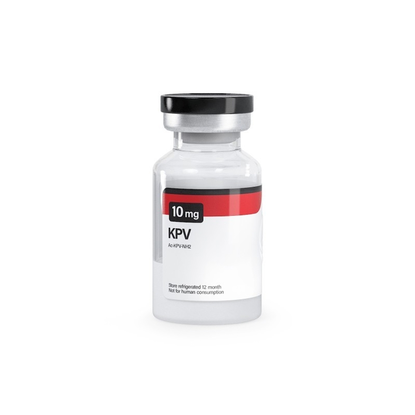
Ultima-KPV 10mg US
$200.00
Product Name: Ultima-KPV (KPV Tripeptide)
Strength: 10 mg per vial
Component: KPV Tripeptide (Lysine-Proline-Valine) — α-MSH (11–13) fragment
Sequence: Lys–Pro–Val (Free Peptide)
Molecular Formula: C₁₆H₃₀N₄O₄
Molecular Weight: Approximately 342.43 g/mol
CAS Number: 67727-97-3
Form: Lyophilized powder for injection
Purity: ≥99% (HPLC)
Description
Buy Ultima-KPV 10mg US
Ultima-KPV is a research-grade tripeptide corresponding to the C-terminal fragment (11–13) of alpha-melanocyte-stimulating hormone (α-MSH) . KPV, composed of the amino acids Lysine-Proline-Valine, has been extensively studied for its distinct anti-inflammatory and immunomodulatory properties .
Unlike the full-length α-MSH hormone, KPV lacks the melanotropic effects responsible for pigmentation, making it a more targeted research tool for investigating inflammation pathways without the pigmentary side effects . Its smaller size and enhanced chemical stability compared to α-MSH further contribute to its utility in laboratory research .
Mechanism of Action
KPV exerts its anti-inflammatory effects through mechanisms distinct from those of full-length melanocortin peptides. Research indicates that KPV is unlikely to mediate its effects through classical melanocortin receptors (MC-Rs) but instead acts through inhibition of interleukin (IL)-1β functions . The tripeptide has been shown to:
-
Suppress nuclear factor kappa-light-chain-enhancer of activated B cells (NF-κB) signaling
-
Inhibit pro-inflammatory cytokine production
-
Reduce immune cell migration in inflammatory models
Alpha-MSH itself, from which KPV is derived, affects multiple pathways involved in regulating inflammatory responses, including NF-kappaB activation, adhesion molecule expression, and production of pro-inflammatory cytokines . The anti-inflammatory potential of α-MSH is largely attributed to its C-terminal tripeptide KPV .
Product Features
-
191-Acid Sequence: Tripeptide Lys-Pro-Val corresponding to α-MSH (11–13)
-
10 mg Vial: Research-grade concentration for laboratory protocols
-
High Purity: ≥99% (HPLC) with third-party testing
-
Pharmaceutical-Grade Quality: Manufactured to rigorous standards
-
Lyophilized Format: Stable powder for reliable storage and reconstitution
-
Research Applications: Anti-inflammatory and immunomodulatory pathway studies
Key Benefits
-
Anti-Inflammatory Properties: Demonstrated significant reduction in inflammatory markers and immune cell migration in research models
-
Immunomodulatory Research: Used to investigate cytokine milieu, redox status, and epithelial barrier dynamics
-
Peptide-Receptor Interaction Studies: Useful for examining the interaction between melanocortin-derived peptides and their targets
-
Cell Signaling Research: Employed in in vitro models to assess effects on cellular signaling cascades related to immune regulation
Recommended Use
Ultima-KPV is intended solely for laboratory research purposes and is not suitable for human consumption . The lyophilized powder must be reconstituted with sterile water or bacteriostatic water for research use.
Reconstitution Instructions
-
Clean the rubber stopper with an alcohol swab
-
Draw the appropriate amount of sterile water or bacteriostatic water into a sterile syringe
-
Inject the water slowly against the glass wall of the vial to avoid foaming
-
Gently swirl until completely dissolved; do not shake vigorously
Research Applications
KPV is utilized in the following research areas:
-
Inflammatory Pathway Research: Investigating molecular mechanisms of inflammation and cytokine-driven changes
-
Tissue Remodeling Studies: Examining epithelial barrier integrity, fibroblast behavior, and cell–matrix signaling under controlled stress conditions
-
ECM Turnover Research: Profiling fibroblast migration and extracellular matrix (ECM) deposition under defined stressors
-
Peptide Synthesis and Analog Development: Serving as a template for the synthesis of modified peptides with altered stability or receptor affinity
-
Analytical and Assay Development: Used as a reference standard in the development of assays targeting peptide-mediated pathways
Storage Instructions
-
Lyophilized Powder: Store at or below 0°F (–18°C), dry, and protected from light
-
After Reconstitution: Store at 36–46°F (2–8°C); avoid repeated freeze-thaw cycles
-
Long-Term Stability: Keep lyophilized and frozen for extended shelf life
Research Use Disclaimer
This product is intended solely for laboratory research purposes. It is not suitable for human or animal consumption, nor for medical, veterinary, or household applications . Researchers should adhere to appropriate safety protocols and institutional guidelines.
Top 10 Frequently Asked Questions
1. What is KPV?
KPV is a research-use-only tripeptide (Lysine-Proline-Valine) corresponding to the α-MSH (11–13) fragment . It is studied for its anti-inflammatory and immunomodulatory properties in laboratory models .
2. What is the molecular identity of KPV?
The tripeptide has the sequence Lys–Pro–Val (free peptide), with a molecular formula of C₁₆H₃₀N₄O₄ and a molecular weight of approximately 342.43 g/mol . The CAS number is 67727-97-3 .
3. How is KPV different from α-MSH?
KPV is the C-terminal tripeptide fragment of α-MSH. Unlike α-MSH, KPV lacks melanotropic effects and thus does not cause pigmentation. It is smaller, more chemically stable, and retains full anti-inflammatory activity through mechanisms distinct from melanocortin receptors .
4. What research applications is KPV used for?
KPV is used to investigate anti-inflammatory signaling, epithelial barrier dynamics, fibroblast behavior, and cell–matrix signaling under controlled stress conditions . It is also employed in peptide-receptor interaction studies and as a reference standard in assay development .
5. What purity standards does Ultima-KPV meet?
Ultima-KPV is manufactured with ≥99% purity (HPLC) and is third-party tested .
6. How should KPV be stored?
Lyophilized KPV should be stored at or below 0°F (–18°C), dry and protected from light . After reconstitution, store at 36–46°F (2–8°C) and avoid repeated freeze-thaw cycles .
7. What is the mechanism of action for KPV?
KPV exerts anti-inflammatory effects through inhibition of interleukin (IL)-1β functions and suppression of NF-κB signaling . It is unlikely to mediate effects through classical melanocortin receptors, unlike other melanocortin peptides .
8. What does the KPV tripeptide sequence represent?
KPV represents the C-terminal fragment (11–13) of α-melanocyte-stimulating hormone (α-MSH) .
9. Is KPV suitable for human use?
No. KPV is intended solely for laboratory research purposes and is not suitable for human or animal consumption .
10. What research models use KPV?
KPV has been studied in models of crystal-induced peritonitis, inflammatory bowel disease, airway inflammation, and other inflammatory conditions in mice .
Ready to take the next step?
Secure your supply of Ultima-KPV 10mg from a trusted source. Visit anabolicsteroidsonline.shop today to explore our selection of premium research products.
Related products
-
- -36%
- SARMs & Peptide Products
ZPHC Testolone (RAD-140) – 10 mg Tablets
- Original price was: $70.00.$45.00Current price is: $45.00.
- Add to cart
Reviews
There are no reviews yet.