
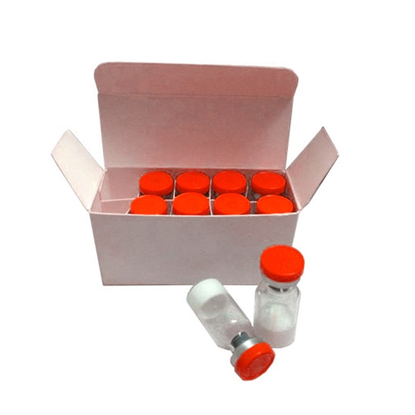
IGF-1 DES 2mg: Research-Grade Truncated Growth Factor
Original price was: $700.00.$650.00Current price is: $650.00.
Product Name: IGF-1 DES (Des(1-3)IGF-I)
Strength: 2 mg per vial
Form: Research-grade lyophilized powder
Component: Insulin-like Growth Factor-1 (DES 1-3) — Truncated IGF-1 Analogue
Molecular Formula: C₁₀₀H₁₆₀N₃₀O₄₀
Purity: ≥95% by HPLC
Application: Laboratory research, tissue repair and muscle maintenance studies
Description
IGF-1 DES 2mg: Research-Grade Truncated Growth Factor
IGF-1 DES (also known as des(1-3)IGF-I) is a naturally occurring truncated analogue of human insulin-like growth factor-1. It lacks the first three N-terminal amino acids (Gly-Pro-Glu) found in the complete IGF-1 sequence . This structural modification makes IGF-1 DES a significantly more potent form of IGF-1, with enhanced bioavailability and greater biological activity than its full-length counterpart . This 2 mg research-grade preparation is intended for laboratory use in tissue repair and muscle maintenance studies .
Structural Characteristics
IGF-1 DES comprises amino acids 4–70 of native IGF-1, omitting Gly-Pro-Glu at positions 1–3 to increase receptor affinity. It retains the native disulfide bonds that stabilize its three-dimensional fold. No additional chemical modifications are present beyond the truncation . The peptide is produced by recombinant expression in bacterial or yeast systems and purified to ≥95% purity, with identity confirmed by mass spectrometry .
Mechanism of Action
Receptor Binding and Signaling: IGF-1 DES binds the IGF-1 receptor (a cell-surface tyrosine-kinase receptor) more readily than full-length IGF-1, triggering intracellular signaling that promotes cell growth and survival . The primary pathways activated include the PI3K/Akt and MAPK signaling cascades, crucial for muscle growth and regeneration . It also promotes glucose uptake in muscle cells and enhances protein synthesis rates .
Reduced Binding Protein Interaction: IGF-1 DES exhibits significantly reduced interaction with IGF-binding proteins (IGFBPs), increasing free hormone availability . This characteristic allows IGF-1 DES to remain more active in tissues and potentially provide more pronounced effects at lower concentrations . Classical studies have demonstrated that under IGFBP-replete conditions, des(1-3)IGF-I proved 10-fold more potent than its intact counterpart in promoting hormone-stimulated progesterone accumulation in rat granulosa cells . In contrast, des(1-3)IGF-I proved virtually equipotent to the unmodified principle under IGFBP-deplete circumstances, confirming that its enhanced potency is due to diminished affinity for endogenously generated IGFBPs .
Transfer and Bioavailability: Compared to native IGF-I, IGF-1 DES can achieve up to ninefold higher concentrations of free peptide in circulation . However, research in lambs has shown that despite marked differences in free peptide levels, net intestinal transfer remained similar for IGF-I and truncated analogues, suggesting that association with 30-50 kDa plasma binding proteins may not be the sole determinant of tissue transfer . Marked species differences in binding affinity have also been documented, with IGF-I variants showing extremely weak binding in rat plasma but binding significantly in plasma from sheep, humans, pigs, and chickens .
Research Applications
This product is suitable for laboratory research and preclinical studies in the following areas:
-
Tissue Repair and Muscle Maintenance Research: Investigating the mechanisms of cell growth, repair, and regeneration
-
Muscle Protein Synthesis Studies: Evaluating the effects of IGF-1 on muscle protein synthesis, RNA levels, and nitrogen balance
-
Wound Healing Investigations: Examining the potential of IGF-1 DES to accelerate chronic ulcer healing
-
Muscle-Wasting Disease Models: Studying the preservation of lean body mass in catabolic conditions
-
Gastrointestinal Research: Investigating the effects of IGF-I peptides on gut absorptive function following intestinal resection
Research Dosing Considerations
Dosing protocols for IGF-1 DES in research settings vary based on the specific experimental model:
-
Human Studies: Research has used 20–50 µg/kg administered subcutaneously once or twice daily for up to two weeks. Some protocols explore intravenous infusion at similar total daily doses. No standardized dosing guidelines exist outside limited trials .
-
Rodent Studies: Infusion rates of 111–700 µg/day have been studied in rats for gut growth and absorptive function following intestinal resection . In diabetic rat models, the two IGF-I variants (des(1-3)IGF-I and LR3IGF-I) were shown to be 2.5–3 times more potent than IGF-I in restoring growth .
-
Typical Laboratory Protocols: Typical dosages in research settings range from 20 to 100 micrograms per day, administered via subcutaneous injection or multiple smaller doses throughout the day to maintain stable levels . Cycle length typically ranges from 4 to 8 weeks in research protocols, followed by breaks to prevent potential receptor desensitization .
Product Features
-
2 mg Research Unit Size: Suitable for laboratory protocols
-
≥95% Purity by HPLC: Manufactured to rigorous standards
-
Lyophilized Format: Stable powder for reliable reconstitution
-
Recombinant Production: Expressed in bacterial or yeast systems
-
Research-Grade Quality: Intended solely for investigational purposes
Storage Instructions
-
Lyophilized Powder: Store at or below -18°C, dry, and protected from light
-
After Reconstitution: Store at 2–8°C; avoid repeated freeze-thaw cycles
-
Long-Term: Keep lyophilized and frozen for extended shelf life, typically 12-24 months
Research Use Disclaimer
This product is intended solely for laboratory research purposes. It is not suitable for human or animal consumption, nor for medical, veterinary, or household applications. IGF-1 DES is classified for investigational use only and has no approval from the U.S. FDA, EMA, or other major regulatory authorities . Researchers should adhere to appropriate safety protocols and institutional guidelines.
Top 10 Frequently Asked Questions
1. What is IGF-1 DES?
IGF-1 DES (des(1-3)IGF-I) is a truncated analogue of human insulin-like growth factor-1 that lacks the first three N-terminal amino acids. This structural modification results in enhanced potency and altered binding characteristics compared to regular IGF-1 .
2. How does IGF-1 DES differ from regular IGF-1?
IGF-1 DES lacks the first three amino acids found in full-length IGF-1, resulting in reduced binding to IGF binding proteins and enhanced bioavailability. This modification makes IGF-1 DES more potent and tissue-selective compared to regular IGF-1 . Research has demonstrated that IGF-1 DES can be 10-fold more potent than native IGF-1 under certain conditions .
3. What is the mechanism of action of IGF-1 DES?
IGF-1 DES binds the IGF-1 receptor more readily than full-length IGF-1, triggering intracellular signaling that promotes cell growth and survival. It exhibits reduced interaction with IGF-binding proteins, increasing free hormone availability . It activates the PI3K/Akt pathway, a signaling cascade involved in protein synthesis .
4. What research applications is IGF-1 DES suitable for?
It is used for tissue repair and muscle maintenance studies, muscle protein synthesis research, wound healing investigations, muscle-wasting disease models, and gastrointestinal research .
5. How potent is IGF-1 DES compared to native IGF-1?
Under IGFBP-replete conditions, des(1-3)IGF-I has been shown to be 10-fold more potent than its intact counterpart in promoting hormone-stimulated progesterone accumulation . In diabetic rat models, IGF-1 variants were 2.5–3 times more potent than IGF-I in restoring growth .
6. What is the half-life of IGF-1 DES?
The half-life is approximately 1–2 hours, requiring multiple daily doses in research protocols .
7. What purity standards does IGF-1 DES meet?
Research-grade IGF-1 DES is purified to ≥95% purity by HPLC, with identity confirmed by mass spectrometry .
8. What are the potential side effects observed in research?
Reported effects include mild, transient hypoglycemia (low blood sugar) and occasional injection-site discomfort. No serious safety signals were observed in studies up to four weeks . Data on long-term administration are not available . Hypoglycemia is considered one of the most significant potential side effects due to IGF-1 DES enhancing glucose uptake by cells .
9. How should IGF-1 DES be stored?
Lyophilized powder should be stored at or below -18°C, dry, and protected from light. After reconstitution, store at 2–8°C and avoid repeated freeze-thaw cycles .
10. Is IGF-1 DES suitable for human use?
No. This product is intended solely for laboratory research purposes and is not suitable for human or animal consumption. It is classified for investigational use only and has no approval from the U.S. FDA, EMA, or other major regulatory authorities .
Ready to take the next step?
Secure your supply of IGF-1 DES 2mg from a trusted source. Visit anabolicsteroidsonline.shop today to explore our selection of premium research products.
Related products
-
- -26%
- SARMs & Peptide Products
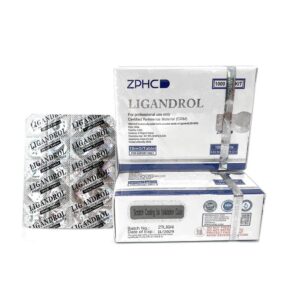
Ligandrol (LGD-4033) ZPHC — 10 mg (100 tablets × 10 mg)
- Original price was: $54.00.$40.00Current price is: $40.00.
- Add to cart
-
- -16%
- SARMs & Peptide Products
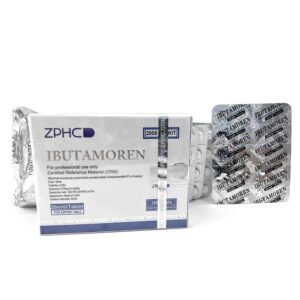
Ibutamoren (MK-677) ZPHC — 20 mg (100 tablets × 20 mg)
- Original price was: $148.00.$125.00Current price is: $125.00.
- Add to cart
Reviews
There are no reviews yet.