
PEG-MGF 2mg: Research-Grade Pegylated Mechano Growth Factor
$500.00
Product Name: PEG-MGF (Pegylated Mechano Growth Factor)
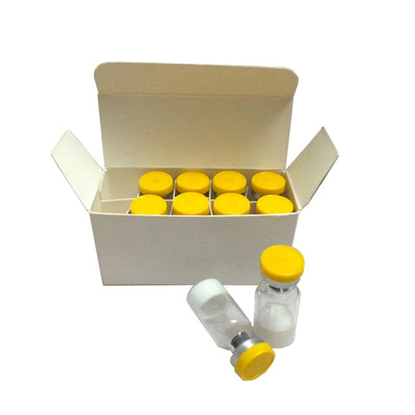
Strength: 2 mg per vial
Form: Research-grade lyophilized powder
Component: Pegylated Mechano Growth Factor (synthetic peptide)
Mechanism: IGF-1 splice variant analog, muscle cell proliferation and differentiation
Purity: >95% (HPLC)
Description
Buy PEG-MGF 2mg: Research-Grade Pegylated Mechano Growth Factor
PEG-MGF (Pegylated Mechano Growth Factor) is a research-grade synthetic peptide, representing a pegylated variant of Mechano Growth Factor . MGF is a splice variant of the insulin-like growth factor-1 (IGF-1) gene, produced locally in muscle tissue in response to mechanical stress and damage . The distinguishing feature of MGF compared to standard IGF-1 is its ability to stimulate the division of myoblasts and promote the fusion and maturation of muscle fibers, a process essential for adult muscle growth .
The crucial modification in PEG-MGF is the pegylation process—the covalent attachment of polyethylene glycol (PEG) chains to the peptide . This process is widely used in peptide development to confer several beneficial properties, including improved resistance to proteolytic degradation, enhanced stability, and a significantly prolonged half-life in biological systems . This addresses the principal limitation of natural MGF, which has an extremely short half-life of only a few minutes .
Mechanism of Action
Muscle-Specific Growth Factor: MGF is produced locally in muscle tissue in response to mechanical stress and damage. Its primary function is to activate satellite cells (muscle stem cells), initiating their proliferation and eventual fusion to repair damaged muscle fibers and facilitate new muscle growth .
Pegylation Extends Bioavailability: The pegylation process extends the half-life of MGF from minutes to days . This allows PEG-MGF to circulate and bind to target tissues, providing a sustained signaling effect .
Cellular Signaling: PEG-MGF is involved in activating anabolic pathways, particularly the Akt/mTOR pathway, which governs cell survival, proliferation, and protein synthesis . It also interacts with specific receptors to stimulate cell growth and differentiation .
Product Features
-
2mg Research Unit Size: Suitable for laboratory protocols
-
>95% Purity (HPLC): Manufactured to rigorous standards
-
Lyophilized Format: Stable powder for reliable reconstitution
-
Pegylated Peptide: Enhanced stability and prolonged activity
-
Research-Grade Quality: Intended solely for investigational purposes
Research Applications
This product is suitable for laboratory research and preclinical studies in the following areas:
-
Muscle Physiology Studies: Investigating satellite cell activation, myoblast proliferation, differentiation, and adaptation to physical stress
-
Tissue Repair and Regeneration: Research on muscle injury recovery, wound healing, and tissue remodeling
-
Cellular Signaling Research: Dissecting IGF-1 isoform signaling pathways (particularly Akt/mTOR) and receptor interactions
-
Regenerative Medicine: Studying muscle-wasting conditions (such as sarcopenia and muscular dystrophies) and strategies for muscle preservation
-
Tissue Engineering: Evaluating the effects of peptide-modified biomaterial scaffolds on cellular proliferation and integration
-
Pharmacokinetic Modeling: Studying the impact of pegylation on peptide stability, resistance to enzymatic breakdown, and biodistribution
Recommended Use
This product is intended solely for laboratory research purposes. The lyophilized powder must be reconstituted using sterile technique.
Reconstitution Instructions
-
Briefly centrifuge the vial before opening to bring contents to the bottom
-
Reconstitute in sterile water or bacteriostatic water to desired concentration
-
Gently swirl until completely dissolved; do not vortex or shake vigorously
-
Apportion stock solutions into working aliquots for research protocols
Storage Instructions
-
Lyophilized Powder: Store at -20°C or below, dry, and protected from light
-
In Solution: Store at 4°C; avoid repeated freeze-thaw cycles
-
Shelf Life: Up to 24 months when stored as lyophilized powder
Research Use Disclaimer
This product is intended solely for laboratory research purposes . It is not suitable for human or animal consumption, nor for medical, veterinary, or household applications. Researchers should adhere to appropriate safety protocols and institutional guidelines.
Top 10 Frequently Asked Questions
1. What is PEG-MGF?
PEG-MGF is the pegylated form of Mechano Growth Factor, a synthetic peptide derived from a splice variant of the IGF-1 gene that plays a key role in muscle repair and regeneration .
2. What does pegylation do?
Pegylation is the process of attaching polyethylene glycol (PEG) to the peptide. This extends the half-life of MGF from minutes to days, improves stability, and slows enzymatic degradation .
3. How is PEG-MGF different from IGF-1?
MGF stimulates myoblast division and muscle fiber fusion through different receptors than IGF-1. While IGF-1 promotes general growth, MGF is specifically involved in muscle adaptation to mechanical stress and tissue repair .
4. What research applications is PEG-MGF used for?
It is used in muscle physiology studies, tissue repair research, cellular signaling investigations, regenerative medicine (e.g., for muscle-wasting conditions), tissue engineering, and pharmacokinetic modeling .
5. What is the structure of PEG-MGF?
The peptide sequence is: PEG-Suc-YQPPSTNKNTKSQ(d)R(d)RKGSTFEEHK-NH2. Its molecular formula is C121H200N42O39, with a molecular weight of approximately 2948.15 .
6. What purity standards does PEG-MGF meet?
Research-grade PEG-MGF is manufactured to >95% purity as determined by HPLC .
7. How should PEG-MGF be stored?
Lyophilized powder should be stored at -20°C or below, dry and protected from light. After reconstitution, store at 4°C and avoid repeated freeze-thaw cycles .
8. How is PEG-MGF administered in research protocols?
Typical research protocols use 200-400 mcg once weekly due to its extended half-life, via subcutaneous or intramuscular injection .
9. What are the potential side effects observed in research?
Short-term local injection site reactions such as pain, redness, and swelling are possible. Disturbances in fluid balance, joint pain, and muscle pain have also been reported .
10. Is PEG-MGF suitable for human use?
No. This product is intended solely for laboratory research purposes and is not suitable for human or animal consumption .
Ready to take the next step?
Secure your supply of PEG-MGF 2mg from a trusted source. Visit anabolicsteroidsonline.shop today to explore our selection of premium research products.
Related products
-
- -13%
- SARMs & Peptide Products
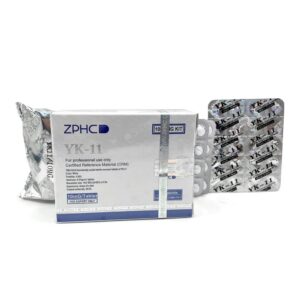
YK-11 ZPHC — 10 mg (100 tablets × 10 mg)
- Original price was: $99.00.$86.00Current price is: $86.00.
- Add to cart
Reviews
There are no reviews yet.