
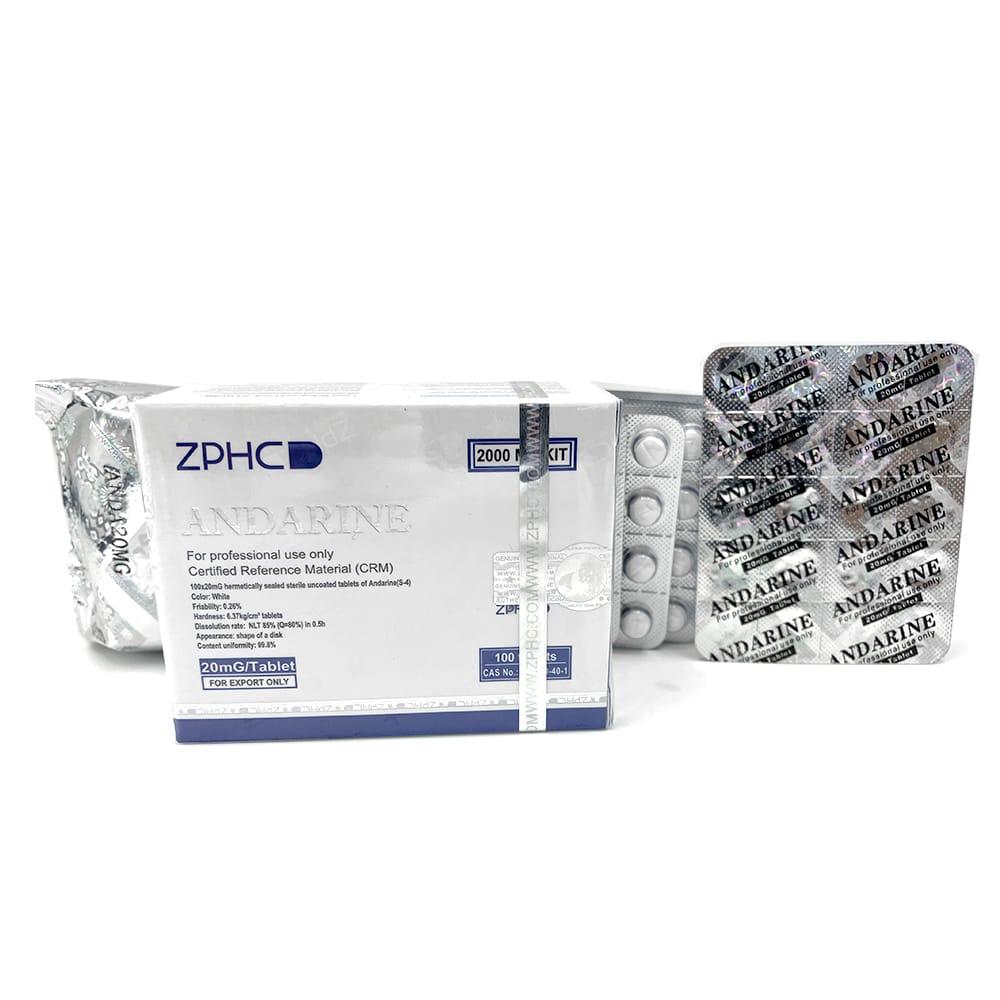
Andarine (S-4) ZPHC — 20 mg (100 tablets × 20 mg)
Original price was: $110.00.$85.00Current price is: $85.00.
Andarine (S-4) by ZPHC – 20 mg Tablets
Product Overview
Andarine, also known as S-4 or GTx-007, is a non-steroidal selective androgen receptor modulator (SARM) developed for research into muscle wasting, osteoporosis, and benign prostatic hypertrophy . This compound demonstrates tissue-selective androgenic and anabolic effects, showing potent anabolic activity in skeletal muscle and bone with minimal pharmacological effect in the prostate .
ZPHC presents Andarine in pharmaceutical-grade 20 mg tablets, manufactured to rigorous quality control standards with verified purity exceeding 99%.
Description
Andarine (S-4) by ZPHC – 20 mg Tablets
Product Overview
Andarine, also known as S-4 or GTx-007, is a non-steroidal selective androgen receptor modulator (SARM) developed for research into muscle wasting, osteoporosis, and benign prostatic hypertrophy . This compound demonstrates tissue-selective androgenic and anabolic effects, showing potent anabolic activity in skeletal muscle and bone with minimal pharmacological effect in the prostate .
ZPHC presents Andarine in pharmaceutical-grade 20 mg tablets, manufactured to rigorous quality control standards with verified purity exceeding 99%.
Key Features
Tissue-Selective Mechanism
Andarine binds to the androgen receptor with a Ki of 4 nM, demonstrating tissue-selective partial agonism that decouples anabolic effects in muscle and bone from androgenic effects in the prostate . In preclinical studies, Andarine at 3 mg/kg/day restored levator ani muscle mass to intact control levels while limiting prostate restoration to only 16% of intact controls .
Research Applications
This compound is indicated for preclinical research into:
-
Muscle wasting and sarcopenia
-
Osteoporosis and bone mineral density restoration
-
Androgen receptor biology and tissue-selective modulation
-
Benign prostatic hypertrophy models
Superior Bone Anabolism
Research demonstrates that Andarine produces significantly larger increases in total body bone mineral density compared to dihydrotestosterone (DHT), with full restoration of lumbar vertebrae, femoral BMD, and biomechanical strength in ovariectomized animal models .
Rapid Clearance Profile
Andarine is cleared from plasma within 12 hours, enabling precise temporal control in pharmacokinetic studies .
Pharmaceutical-Grade Quality
-
100 tablets per box, 20 mg per tablet
-
Scored and film-coated tablets for accurate dose division
-
Sealed blisters in tamper-evident packaging
-
Scratch-code authenticity verification
-
Batch lab-tested for heavy metals and microbiological contaminants
Technical Specifications
| Parameter | Detail |
|---|---|
| Molecular Formula | C19H18F3N3O6 |
| Molecular Weight | 441.36 g/mol |
| CAS Number | 401900-40-1 |
| Purity | >99% (HPLC) |
| Physical Form | Solid, film-coated tablets |
Recommended Research Protocols
Dosage Guidance
-
Standard research range: 20-40 mg daily
-
Beginners may start at 10 mg (half tablet)
-
Doses exceeding 50 mg are generally discouraged due to increased risk of side effects without proportional benefits
Cycle Duration
-
Typical research cycles: 6-8 weeks
-
Extended cycles beyond 8-12 weeks are not recommended
Stacking Considerations
-
Commonly researched in combination with Cardarine or Ostarine
-
Due to its rapid 12-hour clearance, Andarine is typically dosed twice daily for sustained receptor engagement
Safety and Regulatory Information
Andarine is classified as a SARM and has been added to the World Anti-Doping Agency (WADA) prohibited list since 2008 . Clinical development was discontinued in 2006, reportedly due to ophthalmological side effects including transient color vision changes .
The FDA has issued warning letters regarding products containing SARMs, citing safety concerns including liver toxicity, increased risk of heart attack, and stroke . These products are considered unapproved new drugs and are not approved for human consumption .
For research purposes, Andarine should be handled with appropriate laboratory safety protocols. The compound causes serious eye irritation, and protective equipment should be worn during handling .
Top 10 Frequently Asked Questions
1. What is Andarine (S-4)?
Andarine, also known as S-4 or GTx-007, is a non-steroidal selective androgen receptor modulator (SARM) that acts as a tissue-selective partial agonist at the androgen receptor . It demonstrates anabolic effects in skeletal muscle and bone with minimal androgenic effects in the prostate.
2. What is the mechanism of action?
Andarine binds to the androgen receptor with a Ki of 4 nM, activating AR-mediated transcription . Its tissue-selective partial agonism enables anabolic effects in muscle and bone while sparing androgenic tissues such as the prostate and seminal vesicles .
3. What are the typical research dosages?
Standard research dosages range from 20-40 mg daily, typically divided into two doses due to the compound’s 12-hour half-life . Beginners may start at 10 mg (half tablet) to assess tolerance.
4. What is the recommended cycle length?
Research cycles typically run for 6-8 weeks, with a maximum recommended duration of 12 weeks to minimize cumulative adverse effects .
5. Is Andarine safe for human consumption?
No. Andarine is not approved by the FDA for human consumption and is classified as an unapproved new drug . SARMs have been associated with life-threatening reactions including liver toxicity, heart attack, and stroke . Clinical development was discontinued due to safety concerns .
6. What side effects have been reported?
Reported adverse effects include transient color vision changes (yellow tint), hormonal disruptions, liver toxicity, and potential cardiovascular risks . The compound is associated with serious eye irritation and requires protective equipment during handling .
7. Is Andarine detectable in testing?
Yes. Andarine is detectable in hair samples at concentrations of 0.1-0.7 pg/mg, and hair testing offers advantages over urine analysis by detecting the parent compound and metabolites over longer periods . It is included on the WADA prohibited substances list .
8. How does Andarine compare to other SARMs?
Compared to Ostarine (S-22), Andarine has a significantly shorter half-life (12 hours vs 18 hours) and offers superior bone mineral density restoration . Its prostate-sparing profile distinguishes it from other compounds .
9. Can Andarine be stacked with other compounds?
Andarine is commonly researched in combination with Cardarine or Ostarine. However, stacking SARMs significantly increases the risk of drug-induced liver injury and other adverse effects .
10. What post-cycle therapy is required?
Research protocols typically include post-cycle therapy to restore natural testosterone production. Common approaches include selective estrogen receptor modulators such as tamoxifen or clomiphene . Blood work before and after research cycles is recommended to monitor hormonal changes .
Reputable Sources for Further Information
-
National Institutes of Health (NIH) / PubMed: Research publications on SARM pharmacology and safety
-
World Anti-Doping Agency (WADA): Prohibited substances list
-
U.S. Food and Drug Administration (FDA): Safety warnings and regulatory information
-
Tokyo Chemical Industry: Chemical specifications and safety data
Acquire ZPHC Andarine (S-4) 20 mg tablets for your research protocols. This pharmaceutical-grade compound is available in sealed, tamper-evident packaging with verified purity. Visit https://anabolicsteroidsonline.shop/ to place your order and access tracked worldwide shipping.
Reviews
There are no reviews yet.